

Insights
Build the future without the risk
Whether you are modernizing operations or preparing for AI-driven transformation, we give you the tools, guardrails, and intelligence you need to scale safely-globally and sustainably. Be sure to subscribe to our email list to get new insights right to your inbox.
Categories: Logistics | Food Service

The AI You Validated Is Not the AI You’re Running
The AI You Validated Is Not the AI You’re Running
Your AI project will inherit your data problems
AI doesn't fix unreliable data — it scales it. Before funding an AI initiative, ask whether the numbers underneath it can survive a "prove it" question
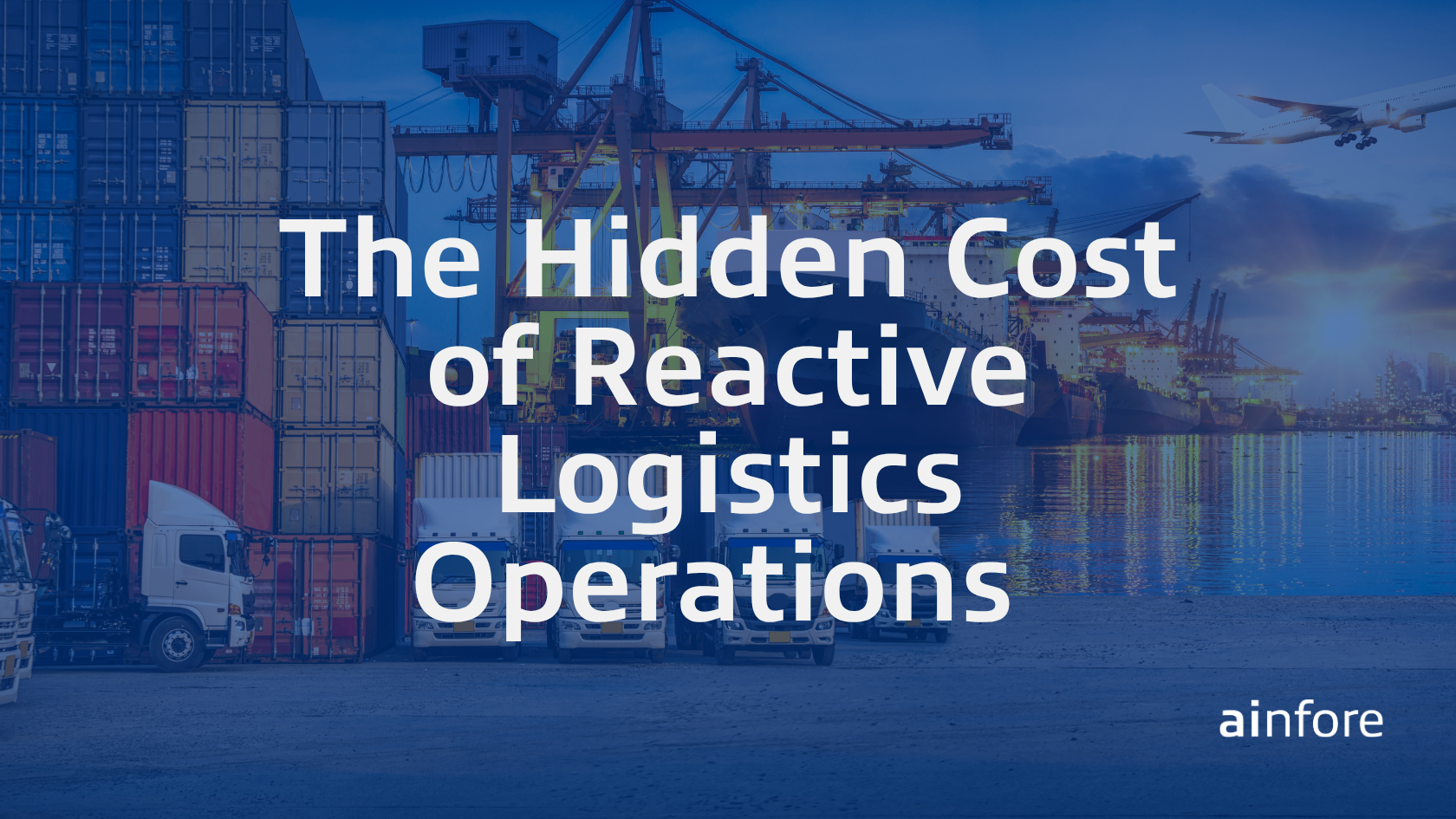
The Hidden Cost of Reactive Logistics Operations
In logistics, the visible problem is often easy to name.
A shipment is late.
A delivery window is at risk.
A carrier update is missing.
A customer asks for a status.
A decision needs to be made quickly.
But the visible problem is rarely the full cost.

Logistics Teams Do Not Need More Alerts. They Need Better Exception Intelligence.
Logistics teams are not short on information.
They have tracking updates, carrier notifications, delivery windows, service reports, customer emails, system dashboards, spreadsheets, and internal follow-ups.
The problem is not simply visibility.
In logistics, visibility is only useful when it helps teams prioritize exceptions, protect service commitments, and act before customer impact escalates.

How to Prioritize Logistics Exceptions Before They Become Customer Issues
The customer issue usually starts before the customer complains.
Shipment Visibility Is Not Exception Management
Why do logistics teams need a stronger handoff from shipment status to business decision.

Practical AI in Foodservice
Foodservice organizations do not need to begin with “AI transformation.” The better starting point is a measurable workflow - such as invoice review, waste monitoring, forecasting support, margin visibility, or exception management - where the business pain is already visible, and the controls can be clearly defined.
AI in Foodservice
Foodservice AI does not need to begin with broad automation. The stronger starting point is one business workflow where the pain is real, the data is available, the output can be reviewed, and the value can be measured.